



During any SAP S/4HANA implementation, companies face a critical decision that will define the project’s success: Does the business adapt to the software or does the software adapt to the business? This is foundational to both the idea of establishing a clean core (a strategic approach to maintaining a streamlined, cloud-compliant ERP system, minimizing customizations while leveraging modern extensibility tools and cloud-based solutions), and the debate between fit-to-standard vs. customization.
It’s a decision that will shape timeline, cost, upgrade path and ability to innovate. And while it’s tempting to default to what’s familiar, this is one of those moments where stepping back and asking “why” can make all the difference.
Fit-to-standard: A strategic starting point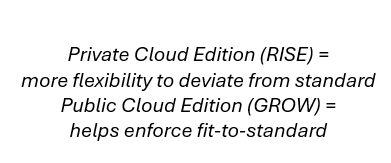
SAP’s fit-to-standard methodology encourages organizations to align their business processes with SAP’s built-in best practices. These processes have been refined across industries and geographies and adopting them can lead to:
- Faster implementation timelines
- Lower technical debt
- Easier upgrades and maintenance
- Improved system stability
Fit-to-standard isn’t about compromise; it’s about clarity. It’s a chance to rethink how the business operates and shed legacy complexity that may no longer serve the organization.
We’ve worked with clients who initially planned dozens of custom workflows. After a structured fit-gap analysis, they realized only a handful of those workflows were truly differentiating. The rest? Legacy baggage.
When customization is the right call
The key is knowing when customization truly adds value.
Take the client featured in our SAP migration case study. Its environment was mission-critical, serving a complex service network with deep technical debt. Customization was a necessity, but the company didn’t customize blindly, instead documenting the rationale, building governance around it and making sure every deviation was supported by a business case.
Customization can be the right choice when:
- There are regulatory or compliance requirements that standard processes don’t address
- The business model is highly differentiated
- Competitive advantages that depend on unique workflows are being preserved
Intentionality drives these decisions. Customization should be strategic, governed and tied to measurable business outcomes.
The implementation approach (greenfield, brownfield or hybrid) will also shape how to navigate fit-to-standard vs. customization. Greenfield provides a clean slate to adopt SAP’s best practices and is ideal for organizations looking to transform their business and shed legacy complexity. Brownfield preserves legacy configurations and customizations, making it suitable for organizations that want to upgrade their platform without disrupting existing processes. Hybrid (or selective data transition) blends both, allowing migration of what’s needed and redesign selectively.
Each path has trade-offs. But as we’ve said, clarity matters most.
This decision also requires stakeholder alignment. IT teams may favor customization to preserve system familiarity. Business leaders may push for transformation and simplification. Finance and compliance may prioritize risk reduction and audit readiness. We often facilitate cross-functional workshops to surface these tensions and guide consensus. The goal is to align on what success looks like and how the system should support it.
A framework for decision-making
One of the most effective tools for navigating this decision is a fit-gap analysis, which helps:
- Compare SAP’s standard processes with current workflows
- Identify where gaps exist and assess whether they’re worth closing through customization
- Prioritize changes based on business value, not habit
- Align stakeholders around what’s truly necessary vs. legacy preference
At Protiviti, we use fit-gap analysis to guide clients through structured workshops that surface the real drivers of customization. It’s a way to move the conversation from “what do we want to keep?” to “what do we need to evolve?”
Organizations unsure about which direction to take can use this simple framework as a guide:
- Is this process truly differentiating?
- Will customization deliver measurable business value?
- Can we adopt SAP best practices without compromising compliance or performance?
- What’s the long-term cost of maintaining this customization?
Beyond implementation, fit-to-standard has long-term benefits. It makes it easier to adopt new SAP features and updates, integrate with ecosystem tools like BlackLine and SAC Planning, scale the system across geographies and business units and maintain agility in the face of change. Customization, if unmanaged, can create upgrade bottlenecks and limit your ability to innovate.
Fit-to-standard offers speed, simplicity and future flexibility, and for many organizations, it’s the right starting point. But customization has its place. The key is knowing when it adds value and when it adds complexity.
Organizations starting the SAP S/4HANA journey should not treat this decision as a technical footnote, but rather as a strategic choice.
Making the right choice requires experience and an objective perspective. Our team can help facilitate the workshops and fit-gap analysis needed to build consensus and create a clear, strategic path forward for an S/4HANA transformation.
Explore our ERP implementation guide: Transforming the Enterprise: How to Guide an ERP Implementation to Success or to learn more about our SAP consulting services, contact us.